Concrete Grinding &
Polishing Made Simple
Eliminate ruined slabs, premature diamond wear, and inconsistent sheen levels. Get instant access to the exact tooling sequences, densifier dwell equations, and troubleshooting protocols used on multi-million dollar architectural floors.
Free PDF · 13 Sections · Built from manufacturer specs and the questions contractors ask us daily

Three Mistakes That Cost the Most
Nobody gets their first concrete floor perfect, and most of the mistakes are the same three. Knowing them before you rent a machine saves more money than any discount on equipment.
The Wrong Diamond
Hard, tight concrete and soft, sandy concrete want different bonds. Run the wrong one and the diamonds glaze over or wear out in minutes while the floor barely changes. This is the most common reason a first grinding job feels like it is not working.
Densifier at the Wrong Stage
Densifier goes on at a specific point in the sequence and needs to dry before you touch it with resin pads. Apply it too early, too late, or flood it on, and you get blotchy sheen and patches that cannot be polished out.
Bidding Without the Real Costs
Tooling wear, blades, chemicals, dust bags, travel, disposal and crew hours all come out of the bid. Miss two of those line items and a job that looked profitable runs at a loss before you ever invoice it.
What's Inside the Guide
Thirteen short sections covering one job from start to invoice, in plain language. No filler, no theory you cannot use on a floor.
Why Polished Concrete
What polished concrete actually is, the jobs it suits (warehouses, shops, garages, retail), the ones it does not, and how it compares to a coating over the first ten years.
Understanding Your Concrete
How slab hardness, aggregate, moisture and the finish the owner wants decide every tool and chemical choice you make before you start grinding.
Choosing Equipment
Walk-behind grinders versus planetary machines: what each one does well, what to rent for a first job, and what to check on a used machine before you buy it.
Diamond Tooling Basics
Metal bond for cutting, hybrid for the transition, resin for polishing — plus how grit numbers work and how to read segment wear before a tool is finished.
Grit Sequences
Where to start, how far to jump between grits, and how many passes each step needs for a cream, salt-and-pepper, medium or high polish finish.
The Polishing Process
A start-to-finish walk-through: site prep, the first cut, edge work, densifier, resin stages and the final burnish — in the order you actually do them.
Densifier, Guard & Sealer
What each chemical does, how much water to mix with densifier, how to apply it evenly, and why coverage math matters more than the brand on the jug.
Dust & Slurry Control
Why dust control matters for your lungs, the customer's house and the finish on the floor — with practical HEPA and wet-grinding setups for the machine you have.
Checklists & Sign-Off
Simple checklists so the crew and the client agree on what finished means, with a short walkthrough to do with the owner before you pack up.
Coatings Overview
When a coating is the better answer than a polish, the difference between epoxy and polyaspartic, and the surface profile each one needs to bond.
Pricing & Business Basics
How to build a bid line by line: labor, tooling wear, consumables, equipment, travel, disposal and profit — with a worksheet you can copy for the next quote.
Troubleshooting
The problems that show up most: swirl marks, uneven sheen, visible grit scratches, cure patches and dust escaping the shroud — with the likely cause and the fix.
Printable Quick Reference
One-page cards for the truck: grit progression by finish, chemical coverage, a job-site checklist and a condensed troubleshooting table.
The Tooling Sequence, Explained
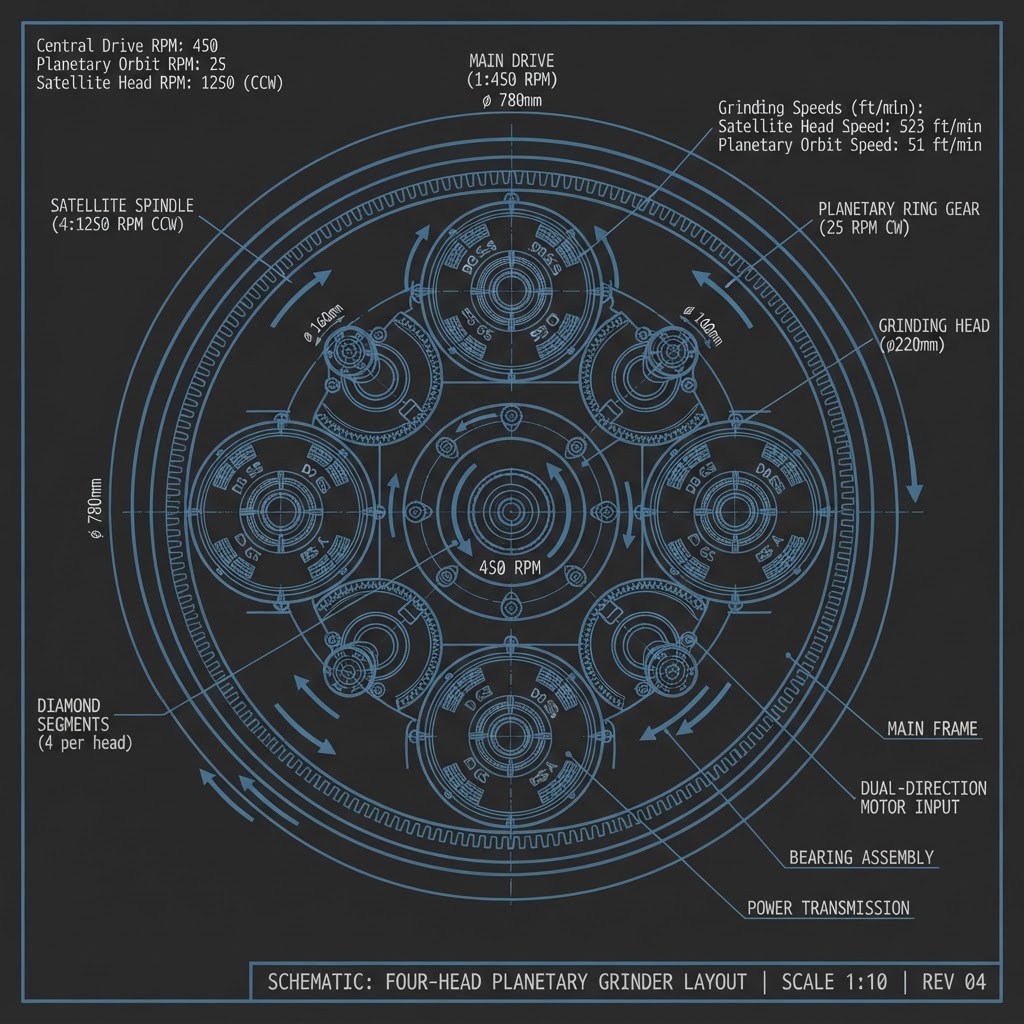
Most planetary grinders use counter-rotating heads, which keeps the machine tracking straight and helps the diamonds cut evenly. The guide explains the order you run tools in — and why — so you can look at a slab and a set of diamonds and know what comes next.
Written for People Doing the Work
This was put together by the team at ZION, who supply the machines, diamonds and chemicals. It is not written by a flooring crew telling war stories — it is the information we find ourselves explaining over and over to contractors picking up their first machine.
Stop Subbing Out the Floor
If you already run a crew and keep handing the concrete floor to someone else, this covers what your own people need to know before they take it on: the tools, the order of work and the questions to ask the owner.
Add Grinding & Polishing
For tile, epoxy and coating crews who keep getting asked for polished concrete. Learn the process, the chemicals and the finish levels so you can answer that question instead of passing on the job.
Learn Before You Rent
For anyone doing their own floor. What to rent, what it costs to run, how much diamond and chemical a bay actually needs, and how to avoid the mistakes that turn a weekend project into a redo.
Start With a Plan, Not a Guess
Get the guide, then call us with your slab, your square footage and the finish you want. We will walk the machine, diamond and chemical choices through with you before you spend anything on the job.
Free PDF · Print as many copies as you need · No Cost

